Building Your First Diorama: A Step-by-Step Guide
Transform your models with compelling dioramas. This beginner-friendly guide covers planning, construction, and finishing techniques.
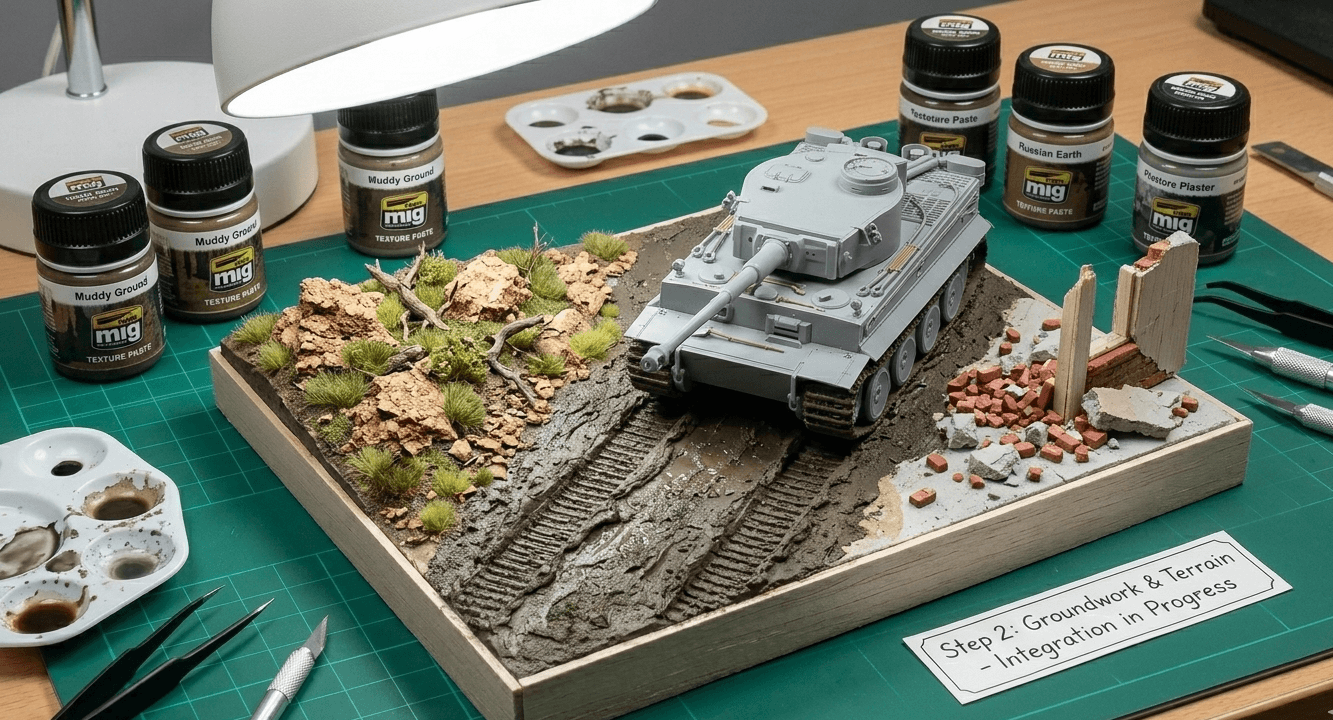
Building your first diorama is the moment you stop building a "model" and start telling a story. A diorama provides context, scale, and drama to your subject, whether it's a tank in a muddy field, a car in a vintage garage, or a starship docked in a hangar.
Here is a step-by-step guide to bringing your models to life.
Before you open a single tube of glue, you need a plan.
- The Narrative: What is happening? Is the vehicle moving or stationary? Are the figures relaxed or in the middle of an "action" pose?
- Composition: Avoid placing your subject perfectly parallel to the edges of the base. Putting a tank or car at a slight angle (the "Rule of Thirds") makes the scene look more natural and dynamic.
- The "Footprint": Don't make the base too large. Too much empty space swallows the model and makes it look lonely. Aim for a base that frames the subject tightly but leaves room for one or two "storytelling" elements (like a crate, a tree, or a signpost).
Start with a solid foundation. You can use a dedicated wooden plaque, a picture frame, or even a thick piece of insulation foam (Styrofoam).
- Pro Tip: If using foam, "seal" the sides with plastic strips or balsa wood for a professional, finished look.
Don't just paint the flat base. Use Staircases, hills, or ruts to add height.
- The Mix: Use a combination of Sculptamold, plaster, or "texture paste" (many brands sell "Mud" or "Sand" textures).
- The Impression: While the paste is still wet, press your model’s tires or tracks into it. This ensures the model looks like it has weight and is sitting in the ground, not floating on top of it.
Now add the "extras" that set the scene.
- Vegetation: Use static grass, dried roots for trees, or laser-cut paper plants.
- Debris: For urban scenes, crushed bricks or small pieces of balsa wood make excellent rubble.
- Rocks: Real pebbles often look too large in scale. Use cork bark or broken plaster for more realistic rock textures.
Avoid using just "brown." Earth is a mix of many colors.
- The Base Coat: Start with a dark earth tone.
- The Highlight: Dry-brush with lighter tans or grays to pick up the texture of the dirt and rocks.
- Wet Look: If you want mud to look fresh, apply a coat of gloss varnish over the dark brown areas.
The biggest mistake beginners make is having a "clean" model on a "dirty" base.
- Apply the same dust or mud you used on the ground to the lower parts of your model. This "tethers" the model to its environment and makes the scene believable.