Back to Blog
Essential Tools for Scale Modeling Success
B
Bob2 min read
Build your perfect modeling toolkit with this comprehensive guide to essential tools, from basic cutters to advanced airbrush systems.
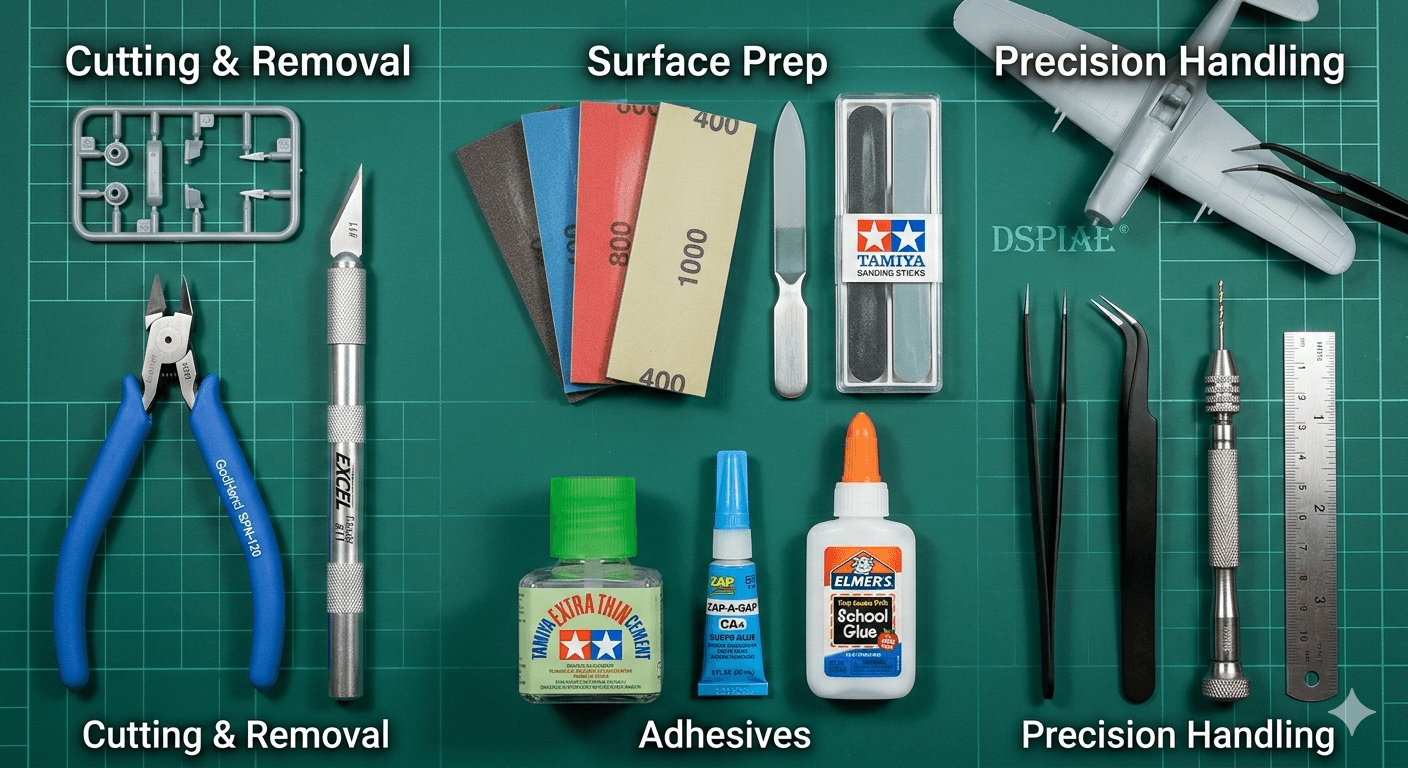
- Single-Edge Nippers (Sprue Cutters): These are your most important investment. Unlike standard pliers, single-edge nippers have one flat side that slices through plastic like butter, minimizing "stress whitening" on the part.
- Hobby Knife (#11 Blades): A classic X-Acto or Excel handle is mandatory. Use it to shave off "nubs" (excess plastic) and mold lines. Pro Tip: Change your blade often; a dull blade leads to slips and jagged edges.
- Sanding Sticks & Sponges: You need a range of grits.
- 400–600 grit for heavy nub removal.
- 800–1000 grit for smoothing the surface.
- 1500+ grit for polishing (essential if you plan to use metallic paints).
- Glass Files: A newer favorite in 2026, these provide an incredibly smooth finish and don't wear out as fast as traditional sanding sticks.
- Extra Thin Cement: (e.g., Tamiya Extra Thin). This is a watery solvent that uses capillary action to "weld" parts together. Hold the parts together first, touch the brush to the seam, and let the glue flow in.
- Cyanoacrylate (CA/Super Glue): Used for "photo-etch" (metal) parts or resin. It doesn't melt plastic, so it’s perfect for mixed-media builds.
- PVA/White Glue: Essential for clear parts like cockpits or windows. Solvent glues will "fog" clear plastic; PVA dries clear and safe.
- Tweezers: You need at least two pairs: a straight-tip for general placement and a bent-nose (angled) pair for reaching into tight cockpits or engine bays.
- Cutting Mat: A self-healing A3 or A4 mat protects your desk and provides a non-slip surface for cutting.