Back to Blog
Choosing the Right Scale
B
Bob2 min read
Confused about which scale to choose for your next aircraft model? This guide breaks down the pros and cons of popular scales to help you decide.
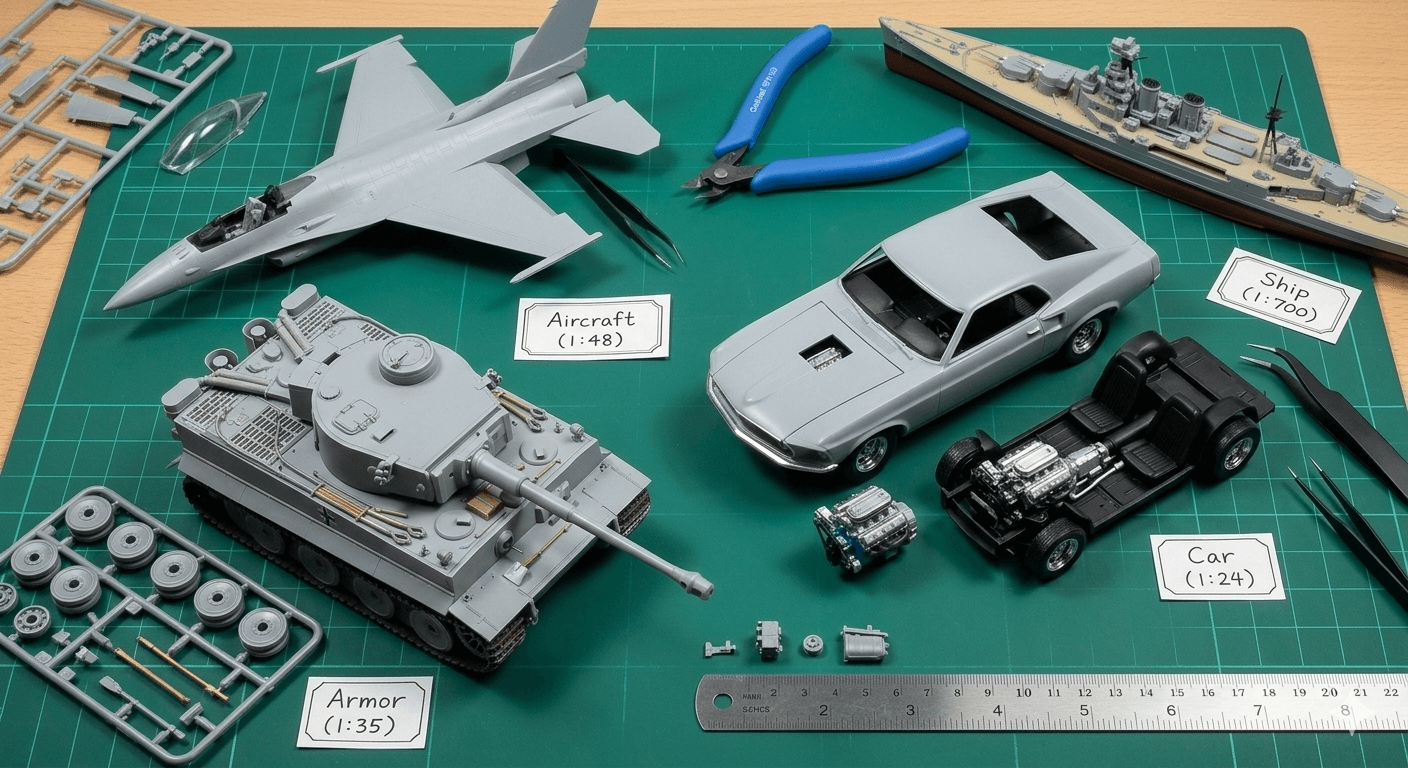
Choosing the right scale is the first big decision in any project. While aircraft modellers often debate 1:48 vs 1:32, every genre of modeling,from tanks to tall ships,has its own "standard" sizes that balance detail with shelf space.
Here is a generic guide to the most common scales across the entire hobby.
Scale is a ratio. A 1:24 scale model means the real object is 24 times larger than the model.
- Small Denominator (e.g., 1:12): Large model, massive detail, takes up a lot of space.
- Large Denominator (e.g., 1:700): Tiny model, fits in your palm, allows for massive collections.
- 1:24 / 1:25: The industry standard. These are roughly 7–8 inches long. They are small enough to collect but large enough to feature opening hoods and detailed engines.
- 1:12: The "Super Scale." These are massive showpieces. You’ll see individual spark plug wires and working suspension.
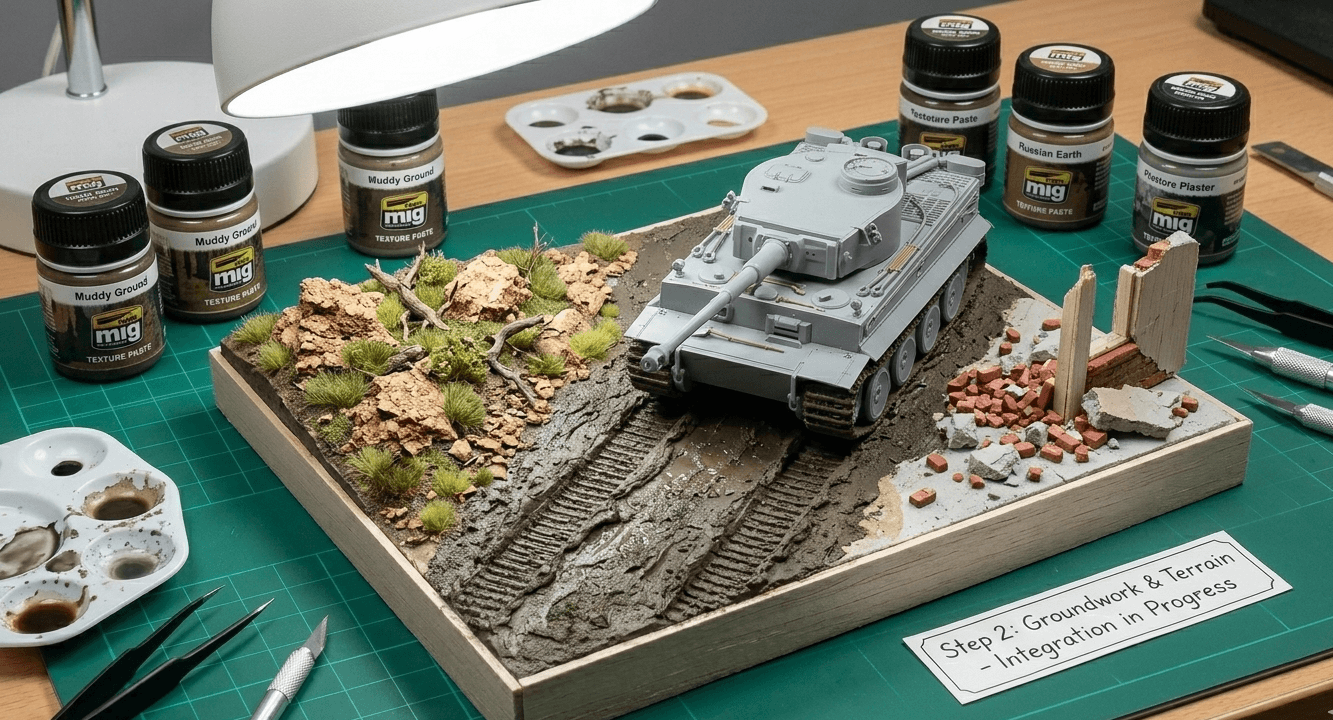
- 1:35: The king of armor scales. Almost all tanks, Jeeps, and figures are made in this size. It’s perfect for adding mud, rust, and battle damage that looks realistic.
- 1:72: "Braille Scale." So named because some details are so small you almost have to feel them. Great for building massive dioramas of entire battlefields.
- 1:72: Ideal for large bombers (which would be too big in other scales) or for builders with limited space.
- 1:48: The most popular choice. Provides a great "heft" to the model without being impossible to store.
- 1:32: For the ultimate enthusiast. Often features "removable" panels to show off internal frame construction.
- 1:350: The standard for "display" ships. A WWII battleship in this scale can be 2 to 3 feet long.
- 1:700: "Waterline" scale. These are tiny but allow you to build an entire naval fleet on a single shelf. They are often used for "forced perspective" in dioramas.
- The "Hand" Test: If you want to pick it up and feel the weight, go for Standard scales (1:35 armor, 1:48 air, 1:24 cars).
- The "Shelf" Test: If you have 20 favorite subjects you want to display together, go for Small scales (1:72 air/armor, 1:700 ships).
- The "Vision" Test: If your eyesight struggles with tiny parts, steer clear of 1:72 and 1:700. Larger scales like 1:32 or 1:35 have parts that are much easier to handle with your essential tools.